Gas Leak Detection in Bayside: Signs and Next Steps (Bayside)
If you have ever caught a faint whiff of rotten eggs near your stove or hot water system, you already know that unsettling feeling. Is it a real gas leak, or just your imagination? For households across Bayside and greater Melbourne, gas leak detection is not something to second-guess. Even a small, slow leak can create serious health and safety risks if it goes unnoticed.
At Almac Plumbing, we have spent over 25 years helping Bayside homeowners and businesses deal with gas fitting issues, from routine appliance installations through to emergency leak repairs. In this guide, we will walk you through the warning signs of a gas leak, what to do the moment you suspect one, and exactly how a licensed gas fitter tracks down and resolves the problem.
Whether you own a weatherboard in Cheltenham or manage a commercial kitchen in Mordialloc, this information could genuinely keep your property and your people safe.
Why Gas Leak Detection Matters More Than You Think
Natural gas is the most common fuel source for heating, cooking and hot water in Victorian homes. It is efficient, affordable and generally very safe when installed and maintained correctly. But when something goes wrong, the consequences can escalate quickly.
Gas leaks pose three main dangers. First, there is the explosion and fire risk. Natural gas is highly flammable, and even a small accumulation in an enclosed space can ignite from a spark or open flame. Second, there is the health risk. While natural gas itself is not toxic, it displaces oxygen in confined spaces and can cause dizziness, nausea, headaches and, in extreme cases, loss of consciousness. Third, prolonged leaks from faulty appliances can produce carbon monoxide, a colourless and odourless gas that is genuinely life-threatening.
Bayside properties face some specific challenges. Many homes in suburbs like Brighton, Sandringham and Hampton were built decades ago, and older gas piping materials such as copper and even lead can degrade over time. Coastal salt air accelerates corrosion on external fittings and regulators, which is a factor that homeowners further inland may never have to worry about.
Renovations are another common trigger. When walls are opened up, floors are relaid or extensions are added, existing gas pipework can be bumped, bent or left exposed to new stresses. These weak points might not become apparent for months, until a joint loosens enough for gas to begin seeping through. Seasonal temperature shifts in Melbourne also play a role. Expansion and contraction of metal pipes over our hot summers and cold winters can gradually weaken solder joints and threaded connections.
Energy Safe Victoria (ESV), the state’s independent energy safety regulator, oversees gas safety standards across Victoria. ESV recommends that all gas appliances be professionally serviced at least every two years and that any suspected leak be treated as an emergency.
The Subtle Signs of a Gas Leak You Should Never Ignore
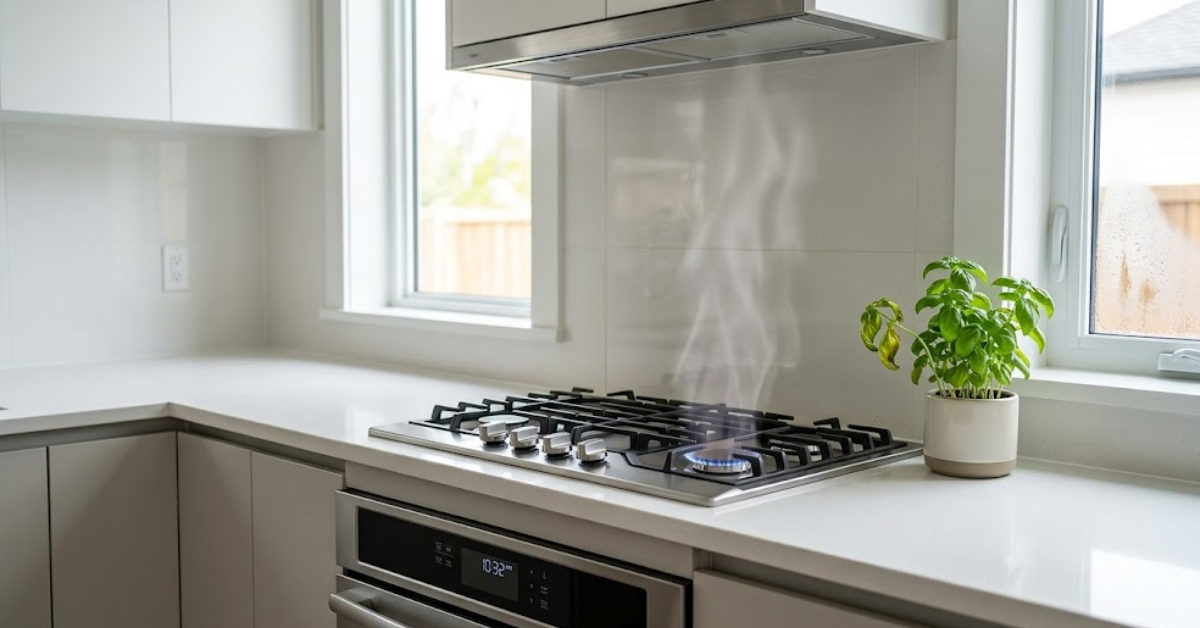
Not every gas leak announces itself with a strong smell. Some of the most dangerous leaks are the quiet ones. Here is what to watch for.
Smell
Gas distributors add a chemical called mercaptan to natural gas, giving it that distinctive rotten egg or sulphur smell. If you notice this odour near your cooktop, gas heater, hot water unit or gas meter, take it seriously. Keep in mind that the smell may be faint if the leak is small or if there is good ventilation.
Sound
A hissing or whistling sound near a gas pipe, appliance connection or regulator can indicate gas escaping under pressure. This is more common with outdoor gas lines and meters, but it can occur anywhere along your gas piping.
Sight
Visual clues are easy to overlook but can be very telling.
- Dead or dying vegetation in an otherwise healthy garden, particularly in a line or patch near where gas pipes run underground.
- Bubbling in standing water or puddles near your gas meter.
- Dust or dirt being blown into the air from a small hole in the ground.
- A white mist or fog near a gas line, especially in cooler weather.
Physical Symptoms
If multiple people in your household are experiencing any of the following symptoms without an obvious cause, a gas leak could be responsible.
- Persistent headaches or dizziness
- Nausea or fatigue
- Difficulty breathing or chest tightness
- Irritated eyes, nose or throat
These symptoms tend to improve when you leave the property and return when you come back inside. That pattern is a strong indicator that something in your home environment needs investigation.
Appliance Behaviour
Your gas appliances can also signal trouble.
- A pilot light that keeps going out
- Yellow or orange flames instead of a clean blue flame
- Soot marks or black staining around a gas appliance
- A gas appliance that takes longer to heat up or does not reach full temperature
If your gas hot water heater is showing signs of trouble, it is worth getting it checked sooner rather than later. A failing heater can develop connection leaks that go unnoticed for weeks.
What to Do Immediately If You Suspect a Gas Leak
Safety warning: If you smell gas strongly or suspect a major leak, do not try to find or fix the problem yourself. Evacuate first, then call for help.
Here is the step-by-step response if you think there is a leak in your home or business.
- Do not switch any lights, appliances or electrical devices on or off. Even a light switch can create a spark.
- Do not use your mobile phone inside the property.
- Do not light matches, candles or any open flame.
- Open doors and windows to ventilate the area if you can do so safely.
- Turn off the gas supply at the meter if you know where it is and can reach it safely. The valve is usually a lever or tap on the meter itself.
- Evacuate everyone, including pets, from the building.
- Once you are safely outside, call your gas distributor’s 24-hour emergency line or the fire brigade on 000.
- Contact a licensed gas fitter to attend and assess the situation.
For non-emergency concerns, such as a pilot light that keeps going out or a faint smell that comes and goes, you should still arrange a professional inspection promptly. These situations may not need a 000 call, but they do need a qualified gas fitter to investigate.
What a Licensed Gas Fitter Actually Does During Gas Leak Detection
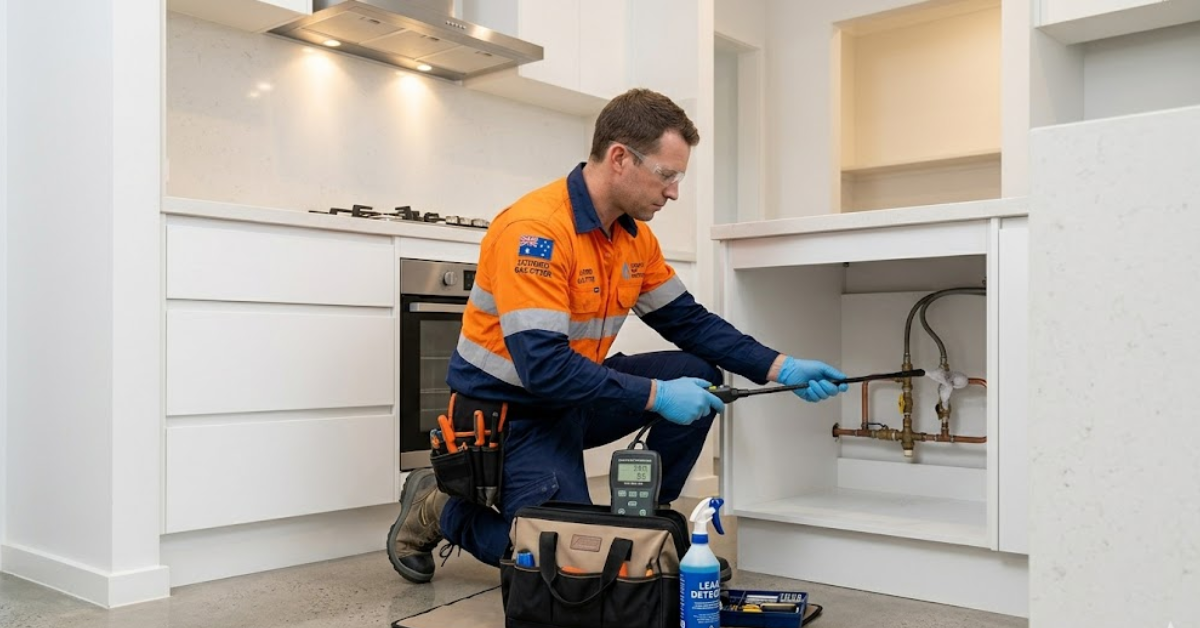
When you call a licensed plumber gas fitter to investigate a potential leak, the process is methodical, thorough and governed by strict Victorian regulations. Here is what typically happens.
Initial Assessment
The gas fitter will first confirm the property is safe to enter. If there is a strong gas smell or a suspected major leak, they may coordinate with your gas distributor to isolate supply at the street before entering. They will ask you about what you noticed, when it started and which appliances have been in use.
Pressure Testing
This is the core diagnostic step. The gas fitter connects a manometer (pressure gauge) to your gas piping and measures whether the system holds pressure over a set period. If the pressure drops, there is a leak somewhere in the system. The rate of pressure drop gives an indication of the leak’s severity. A rapid drop suggests a significant breach, while a slow, gradual decline may point to a pinhole leak or a fitting that has loosened over time.
Pressure testing is non-invasive and does not require the gas fitter to pull apart walls or dig up pipes at this stage. It simply tells them whether the system is sound or compromised. Think of it like a blood pressure check for your gas piping.
Leak Location
Once a leak is confirmed, the gas fitter uses a combination of methods to pinpoint exactly where gas is escaping. These include electronic gas detectors that measure gas concentration in parts per million, soapy water solution applied to joints and connections (bubbles indicate escaping gas), and visual inspection of all accessible pipework, fittings and appliance connections. For underground or concealed pipes, more specialised equipment may be needed. In some cases, sections of pipe are isolated and tested individually to narrow down the location.
Repair or Replacement
Depending on what the gas fitter finds, the repair might be as straightforward as tightening a loose connection or replacing a degraded fitting. In other cases, a section of corroded pipe may need to be cut out and replaced. For older Bayside homes with ageing copper or galvanised gas lines, a full repipe with modern polythene piping may be the safest long-term solution.
All gas leak repair work in Victoria must be carried out by a practitioner who holds current registration or licensing with the Victorian Building Authority (VBA). Once the repair is complete, the gas fitter must retest the system and issue a compliance certificate confirming the work meets regulatory standards.
Post-Repair Checks
A good gas fitter will not just fix the leak and leave. They will retest the entire system to make sure there are no secondary leaks, relight any pilot lights, check that all appliances are operating correctly and advise you on any further maintenance or upgrades that would improve the safety of your gas appliance installations.
Gas Safety for Bayside Commercial Properties
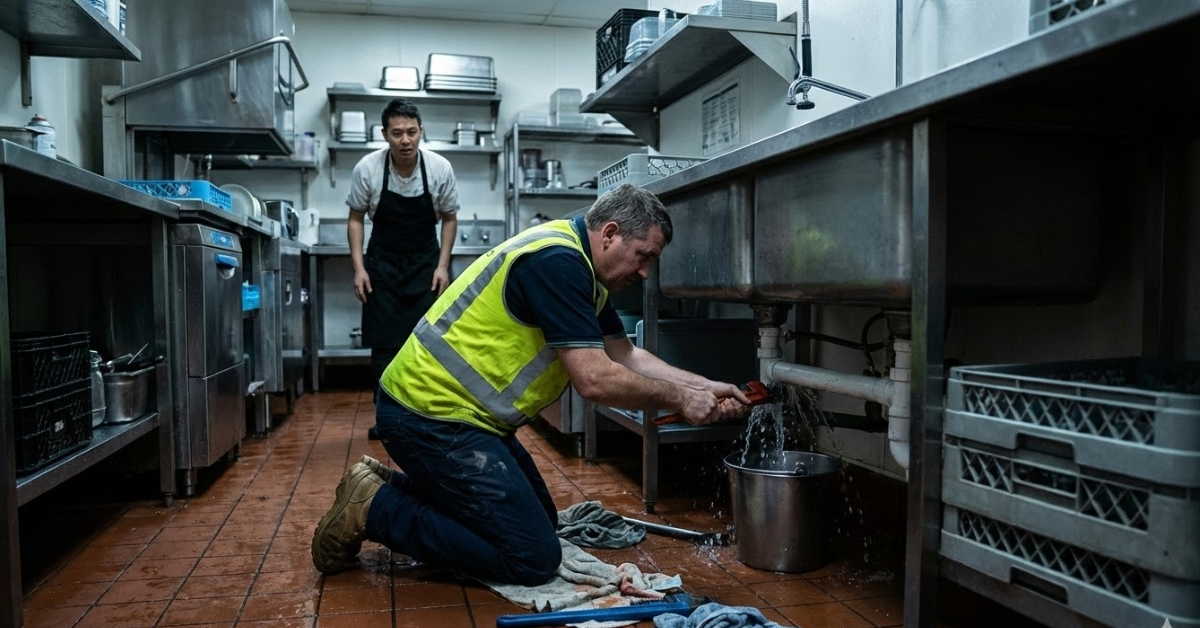
If you run a restaurant, cafe, commercial kitchen or any business that relies on gas, your obligations around gas safety go further than a typical residential property. Under Victorian regulations, commercial plumbing and gas fitting work must comply with additional requirements.
- Commercial gas appliances must be serviced regularly by a licensed gas fitter in accordance with Australian Standards.
- Any gas installation work on commercial premises may require an Application for Acceptance from Energy Safe Victoria before gas can be connected.
- Business owners have a duty of care under workplace health and safety legislation to maintain gas systems and protect staff and customers.
- Kitchen extraction and ventilation systems must be properly matched to gas appliance output to prevent carbon monoxide buildup.
Almac Plumbing works with a range of Bayside businesses, from small cafes in Parkdale to larger commercial operations, providing routine servicing, compliance inspections and emergency gas leak response. If your business relies on gas, having a trusted gas fitter near me you can call at short notice is not a luxury. It is a necessity.
Keep in mind that insurance claims related to gas incidents can be complicated or denied altogether if your gas systems have not been professionally maintained. Keeping records of your servicing history is good practice for any commercial operator.
When to DIY vs When to Call a Professional
Let us be upfront: there is very little about gas work that is safe or legal to do yourself. In Victoria, all gas fitting work must be performed by a registered or licensed gas fitter. This is not a grey area. It is a legal requirement under the Gas Safety Act 1997, and the penalties for non-compliance are serious. More importantly, poorly done gas work can put lives at risk.
That said, there are things you can and should do as a homeowner or business operator.
What you can do:
- Learn where your gas meter and shut-off valve are located.
- Visually check appliance connections for obvious signs of wear or damage.
- Keep the area around gas appliances clear of clutter and flammable materials.
- Schedule professional servicing every two years (or annually for older appliances).
- Install carbon monoxide alarms in rooms with gas appliances.
What you should never do:
- Attempt to repair, modify or extend any gas piping yourself.
- Use a gas appliance that you suspect is leaking or malfunctioning.
- Ignore a persistent gas smell, even if it seems minor.
- Hire an unlicensed person to carry out gas work, even for small jobs.
If you are unsure whether something needs a professional, it almost certainly does. A quick call to a licensed plumber and gas fitter can save you from a dangerous situation and a potential fine for non-compliant work.
Frequently Asked Questions About Gas Leaks
How do I know if I have a gas leak in my house?
The most common signs include a rotten egg or sulphur smell, a hissing sound near gas lines or appliances, dead patches in your garden, and physical symptoms like headaches or nausea that ease when you leave the property. If you notice any of these, ventilate the area and call a licensed gas fitter.
Is a small gas leak dangerous?
Yes. Even a slow leak can allow gas to accumulate in enclosed spaces over time, creating an explosion risk. Small leaks can also produce low-level carbon monoxide exposure that causes chronic symptoms you might not immediately connect to a gas issue.
How much does gas leak detection cost in Melbourne?
Costs vary depending on the complexity of the inspection and the accessibility of your gas piping. A standard pressure test and inspection typically falls within a predictable range, but every property is different. Contact Almac Plumbing for a transparent quote based on your situation.
Can I turn the gas back on myself after a leak is repaired?
It is strongly recommended that your gas fitter reconnects the supply and checks all appliances before you use them again. Turning gas back on without a proper safety check can be dangerous, especially if pilot lights need to be relit or appliance settings need to be adjusted.
How often should gas appliances be serviced?
Energy Safe Victoria recommends servicing all gas appliances at least every two years. For older appliances, gas heaters, and any appliance in a rental property, annual servicing is a smarter approach. Regular servicing catches small problems before they become leaks.
Do I need a licensed gas fitter for a gas cooktop replacement?
Absolutely. Any disconnection or connection of a gas appliance must be carried out by a VBA-registered or licensed gas fitter. This includes cooktops, ovens, heaters, hot water systems and barbeque points. The gas fitter must issue a compliance certificate once the work is complete.
What should I do if I smell gas outside near the meter?
A gas smell around the meter could indicate a leak in the supply line or meter connection. Do not attempt to fix it. Move away from the area and call your gas distributor’s emergency line. They will send a technician to assess the supply side, and you may need a licensed gas fitter for any work on your side of the meter.
Keep Your Bayside Property Safe with Professional Gas Leak Detection
Gas leaks are not something to put off or hope will resolve on their own. The signs can be subtle, but the risks are real. Whether it is a faint smell near your hot water system, an appliance flame that does not look right, or unexplained symptoms affecting your family, getting a professional gas leak detection inspection is the smartest step you can take.
Almac Plumbing has been serving Bayside and greater Melbourne for over 25 years. Our licensed gas fitters handle everything from routine safety checks to emergency leak repairs across residential and commercial properties. We are VBA-licensed, fully insured and committed to giving you honest, straightforward advice.
If you have concerns about gas safety in your home or business, get in touch with Almac Plumbing today or call us directly on 0418 517 797. We would rather check and find nothing than have you wait and find out the hard way. Your safety is always worth the call.